Foundational Concepts
Principles of Wholesome Nutrition
A structured, descriptive overview of the core concepts that underpin the study of nutrition as an educational field — presented without personal recommendation.
Concept I
Dietary Variety as a Nutritional Concept
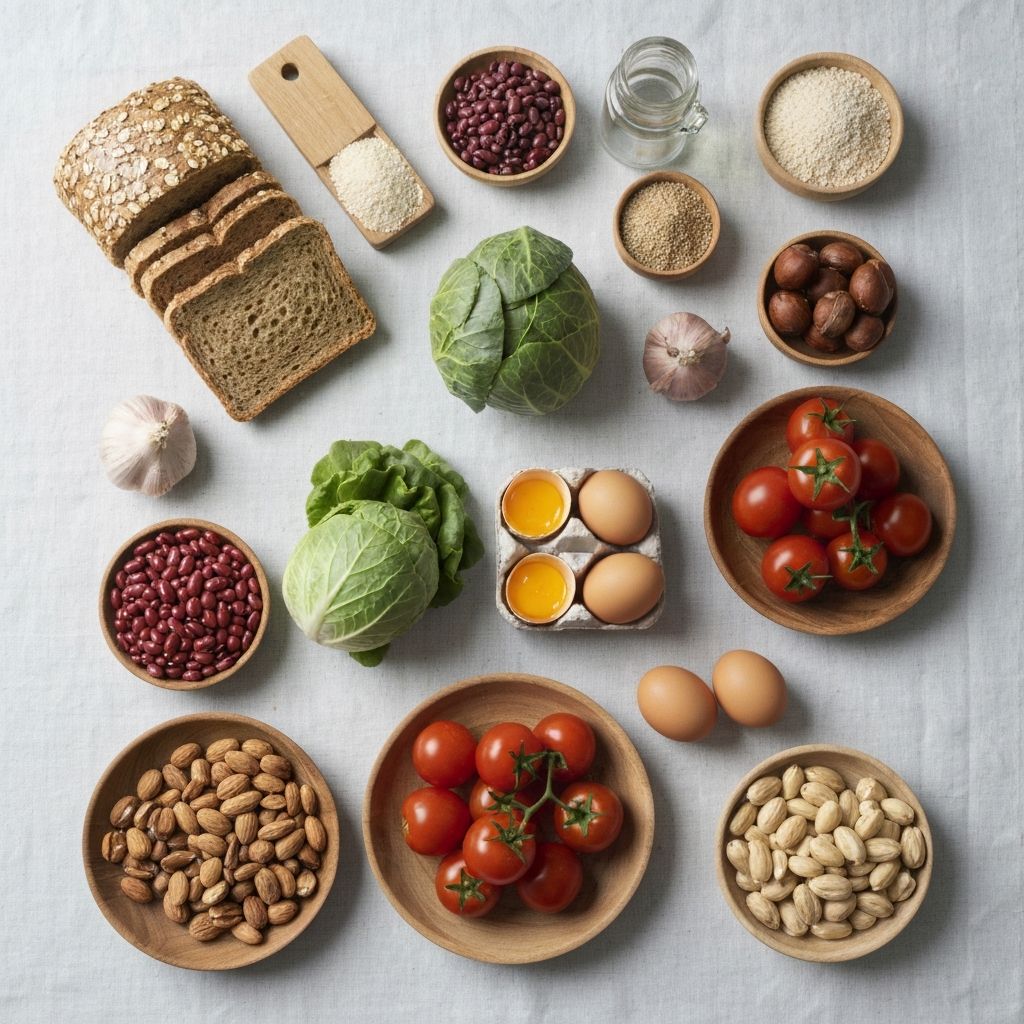
Dietary variety is among the most consistently referenced concepts in nutritional science. It describes the principle that consuming a wide range of foods from multiple categories increases the probability of meeting the body's requirements for all essential nutrients — since no single food provides every required compound in adequate proportions.
The nutritional value of variety lies in its structural logic: different food categories contribute different primary nutrients. Grains provide complex carbohydrates; legumes provide protein and fiber; vegetables contribute micronutrients and phytonutrients; fruits provide vitamins, water, and natural sugars. The interplay between these categories, rather than reliance on any individual food, is the conceptual basis of variety as a nutritional principle.
Variety also encompasses diversity within categories — consuming a range of different vegetables rather than only one type, for example — since distinct species and varieties of the same food type carry different micronutrient profiles.
Concept II
Macronutrient Proportionality
Macronutrient proportionality refers to the relative distribution of proteins, carbohydrates, and fats within an overall eating pattern. Nutritional science does not universally prescribe a single correct ratio — context, cultural food traditions, and scientific frameworks vary — but proportionality as a concept emphasizes that all three categories serve essential roles and that extreme exclusion of any one category alters the nutritional profile of a diet in ways studied by food scientists.
Concept III
The Food Processing Spectrum
Foods exist across a spectrum from minimally processed to highly processed. Understanding this spectrum is a fundamental component of food literacy — describing how processing alters the nutritional composition and physical structure of foods.
Unprocessed Foods
Foods in or close to their natural form. Examples include raw vegetables, fresh fruits, whole grains, legumes, eggs, and nuts. These foods retain their original matrix — the complete arrangement of nutrients, fiber, and water as they exist naturally.
Minimally Processed Foods
Foods that have undergone physical processing — cleaning, cutting, cooking, fermentation, or drying — without significant alteration to their nutritional composition. These processes often improve digestibility or safety without removing primary nutrients.
Processed Foods
Foods to which salt, sugar, oil, or other substances have been added to extend shelf life or modify flavor. Processing at this level may alter the original nutritional profile by adding components not present in the natural food or by removing parts of the food matrix such as fiber or bran.
Ultra-Processed Foods
Industrial formulations containing ingredients not typically used in home cooking: emulsifiers, flavorings, colorings, and stabilizers. These products are generally engineered for palatability and shelf stability rather than nutritional completeness, and are the subject of significant nutritional science research regarding their compositional characteristics.
Concept IV
Principles of Meal Composition
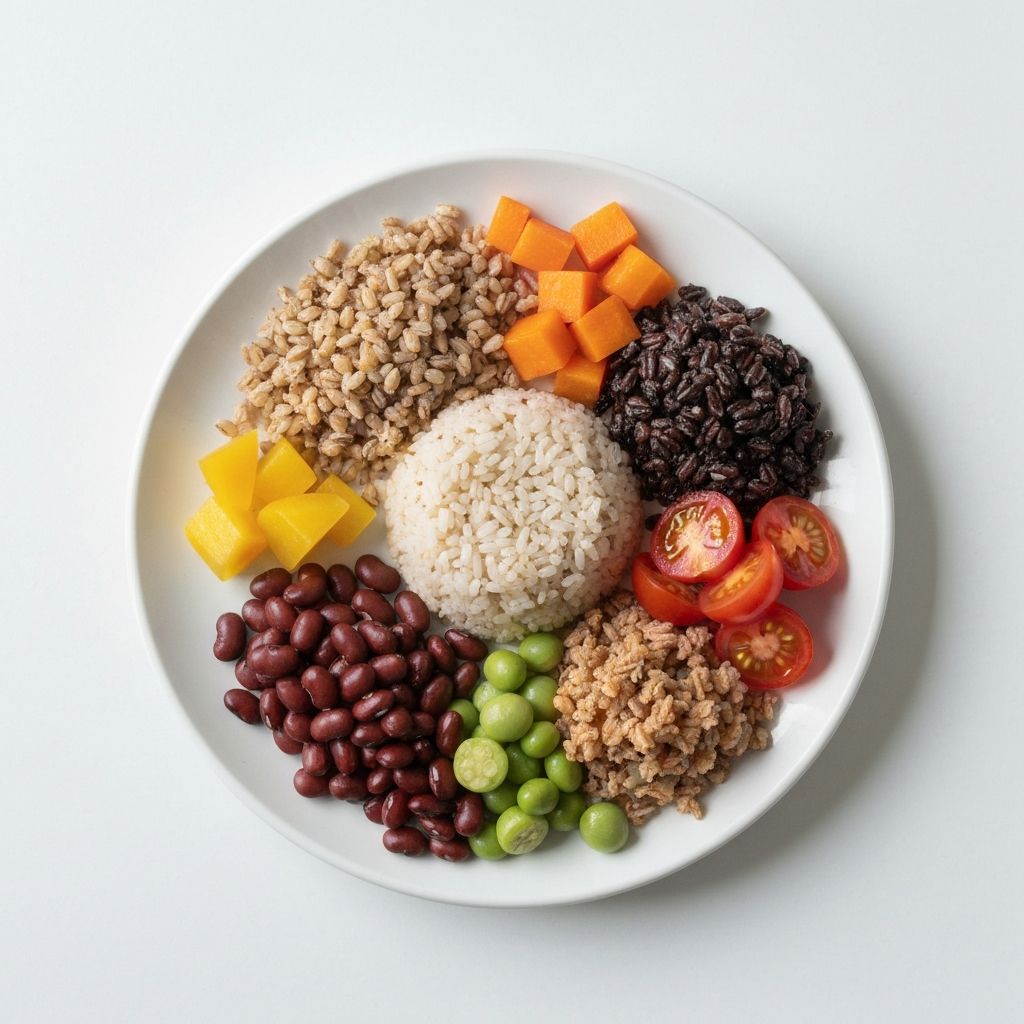
Nutritional education frequently presents frameworks for understanding how individual foods can be combined within a meal to provide a range of nutrients. These frameworks are descriptive — they describe patterns observed in nutritional science, not instructions for specific individuals.
Proportional Representation of Food Categories
Nutritional frameworks frequently describe meals in which the plate is divided between categories rather than dominated by a single food type. A meal containing a carbohydrate source, a protein source, a fat source, and a vegetable component draws from multiple nutritional categories simultaneously and provides a more complete micronutrient profile than a meal composed of items from a single category.
This principle of proportional representation is descriptive — it reflects patterns documented in nutrition science literature across many cultural dietary traditions rather than prescribing precise quantities or ratios.
Food Matrix Interactions
Foods do not exist in nutritional isolation when combined in a meal. The concept of food matrix interaction describes how nutrients from different foods can influence each other's bioavailability and absorption. Vitamin C from a fresh tomato enhances the absorption of plant-sourced iron from lentils when consumed together. Fat-soluble nutrients such as vitamin A require the presence of dietary fat for efficient absorption.
These interactions are studied within nutritional biochemistry and represent one reason why dietary variety within a single meal, rather than over only a longer time period, is recognized as compositionally significant.
Fiber Distribution Across the Day
Dietary fiber, obtained from whole grains, vegetables, fruits, and legumes, plays a structural role in digestion and microbiome support. Nutritional education notes that fiber intake is most effectively distributed across multiple meals throughout the day rather than concentrated in a single meal — a pattern that reflects how fiber functions within the digestive tract over time rather than how it is absorbed biochemically.
Primary whole food sources of dietary fiber include oats, brown rice, barley, lentils, chickpeas, apples, pears, broccoli, carrots, and seeds.
Seasonal and Regional Food Patterns
Many traditional dietary patterns, studied in cross-cultural nutritional research, align with seasonal food availability. Seasonal foods tend to be fresher at the point of consumption and require less preservation processing, which is associated with better retention of certain heat-sensitive vitamins. Regional dietary traditions — the Mediterranean, East Asian, or Andean food traditions, for example — are studied in part because of the nutritional diversity of their traditional food bases.
Understanding seasonality and regional food culture provides context for why certain food patterns have been nutritionally studied as examples of dietary variety in practice.
Water as a Component of Meal Planning Frameworks
Hydration considerations within nutritional frameworks include not only beverage intake but also the water content of foods consumed across the day. Fruits and vegetables contribute substantially to total daily fluid intake, with foods such as cucumber, lettuce, watermelon, and tomatoes containing over 90% water by weight. Nutritional education that addresses meal composition typically includes this dimension of hydration alongside solid food categories.
Reading Food Composition Labels
An understanding of food composition labeling is a component of nutritional literacy. Labels on packaged foods typically communicate energy content (in calories or kilojoules), macronutrient quantities, and selected micronutrient data per 100g and per serving. Understanding how to interpret these figures — particularly the distinction between total fat and saturated fat, or between total carbohydrates and dietary fiber — allows for a more informed comparison of foods. This is an educational skill rather than a prescription for how to choose foods in any given circumstance.
Concept V
Cultural Dimensions of Nutrition
Food is not only a biological phenomenon — it is embedded in cultural, historical, and social contexts that shape how communities engage with nutrition across generations. Nutritional education benefits from acknowledging these dimensions without imposing value judgments.
Andean Food Traditions
The Andean region — which includes Peru, Bolivia, and parts of Ecuador and Colombia — is among the world's most biodiverse food origins. Quinoa, kiwicha (amaranth), potato (with thousands of native varieties), maize, cañihua, and a rich diversity of legumes are native to this region. These foods have sustained populations for millennia and are studied by nutritional scientists for their macronutrient density and micronutrient profiles. Andean cuisine represents one of the world's most complete traditional food traditions in terms of nutrient variety.
Fermentation Traditions
Fermented foods appear across virtually every food culture globally — yogurt, kefir, miso, tempeh, kimchi, sauerkraut, kefir grains, and sourdough bread among many others. Fermentation alters the biochemical composition of foods, increasing bioavailability of certain nutrients, producing B vitamins through microbial activity, and introducing live microbial communities that interact with the gut microbiome. The nutritional significance of traditional fermented foods is a growing area of scientific study.
Plant-Based Dietary Traditions
Many of the world's longest-established dietary traditions are predominantly or entirely plant-based, structured around legumes, grains, vegetables, fruits, and nuts with limited or no animal products. These traditions — found across South and East Asia, parts of the Mediterranean, and Latin America — have been studied in nutritional epidemiology for the breadth of their macronutrient and micronutrient profiles. The nutritional completeness of plant-based traditions is a function of their diversity rather than the exclusion of animal products per se.
Communal Eating Patterns
Research in nutritional anthropology and behavioral nutrition notes that communal eating — meals shared with others at a table, without screens or distraction — is associated with patterns of slower consumption, greater variety in foods served, and greater awareness of food composition. Traditional communal meal structures in many cultures include multiple small dishes covering different food categories, which naturally increases variety within a single meal occasion.
Concept VI
Sustainable Eating — An Overview
Sustainable eating refers to patterns of food consumption that acknowledge the relationship between food systems and environmental impact. It is not a prescriptive dietary system but a framework of understanding studied at the intersection of nutritional science, ecology, and food systems research.
The concept addresses how food production, transportation, and waste interact with land use, water resources, and carbon cycles. It is presented here as an informational context — not as an argument for any particular dietary pattern or set of choices.
Key Terms
Concept VII
Navigating Nutritional Information
The landscape of publicly available nutritional information includes reliable scientific literature alongside poorly evidenced claims. Understanding the structural characteristics of each helps contextualize information encountered in any format.
Characteristics of Established Nutritional Concepts
- Derived from peer-reviewed food science or nutritional research literature
- Acknowledges complexity, nuance, and individual variation
- Does not claim single foods as comprehensive solutions
- References the broader scientific consensus rather than isolated findings
- Consistent across multiple independent research traditions
- Does not attribute dramatic or guaranteed outcomes to dietary changes
- Clearly distinguishes between association and causation in research findings
- Acknowledges the limits of nutritional science as a discipline
Characteristics of Poorly Evidenced Claims
- Attributes remarkable or universal effects to a single food, compound, or practice
- Presents complex biological outcomes as simple and guaranteed
- Contradicts established nutritional science without substantial new evidence
- Lacks attribution to peer-reviewed literature or primary research sources
- Promoted primarily through commercial channels with identifiable financial interest
- Uses persuasive or emotional language rather than descriptive scientific framing
- Relies on anecdotal accounts as primary evidence
- Discourages independent verification or consultation with qualified professionals
Information Source Assessment Framework
Is the authorship transparent and qualifications verifiable?
Are specific research studies or scientific bodies referenced?
Does the source acknowledge uncertainty where it exists?
Is there an apparent commercial interest in the claims made?
Are the claims consistent with the broader scientific literature?
Does the source distinguish between correlation and causation?